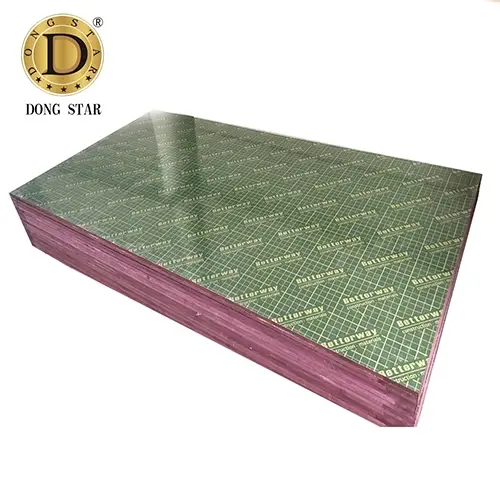
Medium Density Fibreboard and plywood serve many of the same furniture and interior applications, but their structures produce different results. Standard MDF commonly has a density of about 600–800 kg/m³, while many hardwood plywood panels fall around 500–700 kg/m³. MDF gives a smoother surface for painting and CNC routing; plywood usually provides better bending strength, screw holding and moisture tolerance. An 18 mm MDF sheet may weigh roughly 35–40 kg depending on density, while an equivalent plywood sheet can be 15–30% lighter. For painted doors and decorative panels, MDF is often practical. For cabinets, shelving, flooring and structural work, plywood is generally better suited.
MDF is made by refining wood into small fibres, mixing them with resin and wax, and pressing the mixture under heat. The process creates a panel with almost no grain direction, knots or natural voids. Typical commercial MDF density ranges from about 600 to 800 kg/m³, although high-density grades can exceed 800 kg/m³. Plywood uses thin wood veneers bonded in layers, usually with adjacent grain directions placed at roughly 90 degrees. A common plywood sheet may contain 5, 7, 9, 11 or more veneer layers depending on thickness and grade.
That difference in construction explains much of the difference in mechanical performance. MDF is uniform through most of its thickness, so cutting and routing are predictable. Plywood keeps a large share of the natural longitudinal strength of wood fibres inside each veneer. Depending on species and grade, plywood bending strength can exceed 30–60 MPa, while general-purpose MDF products often fall closer to roughly 20–40 MPa. Product specifications vary, so EN 310 or ASTM D1037 test data should be checked when bending strength is important.
Weight also affects how each panel behaves in furniture production. An 18 mm MDF panel measuring 1,220 × 2,440 mm can weigh around 35 kg when density is near 650 kg/m³. Higher-density products can approach or exceed 40 kg per sheet. Comparable plywood may be around 20–30 kg, depending on timber species and veneer construction. A cabinet using several full sheets can therefore become 20–35% heavier when MDF replaces lighter plywood throughout the carcass.
Extra weight is not always a disadvantage because MDF provides a solid feel and a stable machining surface. Its fine fibre structure works well with CNC routers, allowing grooves, raised profiles, recessed patterns and curved edges without exposing multiple veneer layers. For painted cabinet doors, decorative wall panels and routed mouldings, this consistency can reduce filling and surface preparation. A factory producing hundreds or thousands of identical door panels may also benefit from the small variation between sheets.
Plywood requires a different finishing approach because the face is real wood veneer. Birch, oak, maple and other decorative faces may be clear-coated instead of painted, while construction plywood may have patches, knots or visible grain variation. Veneer thickness varies by product, but decorative face veneers can be well below 1 mm, so aggressive sanding can damage the visible layer. When appearance matters, grade designations and face-quality specifications deserve as much attention as panel thickness.
Fastener performance creates another separation between the materials. Screws driven into plywood engage several layers of wood veneer, while screws in MDF engage compressed fibres. Face fastening can work well in both materials, but MDF edges are easier to damage if pilot holes are too small or screws are placed close to the edge. Furniture manufacturers often keep screw locations at least several panel thicknesses away from weak corners and select fasteners designed for fibreboard.
Repeated assembly makes the difference more noticeable. A screw removed and reinstalled several times can progressively enlarge an MDF hole, particularly when the fitting is placed in the panel edge. Plywood generally tolerates repeated fastening better because intact veneer layers continue to provide material around the thread. For knock-down furniture expected to be moved frequently, hardware such as inserts, confirmat screws, cross dowels or dedicated cabinet connectors can improve joint life in both products.
Shelf design adds bending over time to the comparison. MDF shelves can remain flat at short spans but may show greater long-term deflection under books, equipment or kitchenware. Increasing a shelf from 18 mm to 25 mm substantially raises stiffness because bending resistance increases strongly with panel thickness. Adding a solid front lipping, reducing the span from 900 mm to 600 mm, or adding an intermediate support can also reduce visible sag without changing the entire cabinet material.
Plywood performs well in longer spans because of its veneer structure and lower weight. A plywood shelf does not automatically outperform every MDF shelf, however. Species, number of plies, internal voids, veneer thickness and adhesive quality all affect results. A low-cost 5-ply panel can behave very differently from a high-grade 13-ply panel of the same nominal thickness. Buyers comparing panels should request technical sheets rather than relying only on terms such as “hardwood plywood.”
Moisture exposure requires even more attention to grade. Standard MDF can absorb water rapidly through unsealed edges, causing permanent thickness swelling and loss of surface quality. Moisture-resistant MDF uses modified resin systems and can perform better in kitchens, bathrooms and other humid interiors, but MR does not mean waterproof. Under EN 622 classifications, manufacturers separate MDF types according to dry or humid service conditions rather than treating all fibreboard as one product.
Plywood also varies widely in moisture performance. Interior plywood may use adhesive systems intended only for dry conditions, while exterior plywood uses bonds capable of handling repeated moisture exposure. EN 314 evaluates plywood bond quality, and EN 636 classifies plywood for dry, humid or exterior conditions. Marine plywood made to standards such as BS 1088 has stricter requirements for veneer quality and bonding. Even then, exposed edges and faces normally need suitable sealing or coating.
Thickness change is especially important near sinks, floors and exterior openings. Some standard MDF products can show thickness swelling above 10% after water-related test conditions, while moisture-resistant grades may perform substantially better. The acceptable figure depends on board type, thickness and the applicable standard. Specifying “18 mm MDF” without a moisture class provides too little information for a bathroom vanity or commercial washroom installation.
Surface finishing moves the comparison back toward MDF. Because the face contains no natural grain pattern, primer and paint can create an even surface with fewer visual variations. Edges are more absorbent than the factory face, so they normally need additional sealing and sanding. Two or more preparation stages are common in painted furniture production when manufacturers want edges and faces to show the same gloss level after the final coating.
Plywood offers more options when a real timber appearance is wanted. A clear finish can preserve the veneer grain, while edge banding can conceal the layered core. Some designers deliberately leave high-quality multiply edges exposed because the alternating veneer lines form part of the finished appearance. Lower-grade plywood may contain internal gaps, so exposed edges should be inspected before they are made part of a visible furniture detail.
Panel emissions also deserve attention in indoor projects. Both MDF and plywood can use formaldehyde-based resins, although emission levels depend on resin chemistry, manufacturing controls and certification. In the United States, EPA TSCA Title VI requirements align closely with CARB Phase 2 limits for regulated composite wood products. For MDF, the formaldehyde emission limit is 0.11 ppm under the applicable chamber test framework, while thin MDF has a separate 0.13 ppm limit.
European buyers may encounter E1 classifications and EN test methods, while North American projects may specify TSCA Title VI or CARB compliance. Asking whether MDF “contains formaldehyde” is less useful than checking the stated emission class, certification body, production date and test documentation. The same approach applies to plywood because glue type and manufacturing control vary between factories and products.
Cost comparisons should include more than sheet price. MDF often costs less than decorative hardwood plywood, but its greater weight can raise handling and freight costs. Plywood may cost 20–60% more in some grade comparisons, yet higher stiffness can allow lighter construction or fewer reinforcements. MDF may reduce sanding and filling costs on painted components. Labour, hardware, edge treatment, coating and rejection rates can change which panel is cheaper in a completed cabinet.
Large-volume buyers also need consistent thickness, moisture content, bonding and face quality across production batches. Nominal 18 mm panels do not always measure exactly 18.00 mm, and allowable tolerances vary by standard and product type. CNC operations using dadoes, dowels or precision hardware can expose small thickness differences quickly. Purchasing specifications should therefore state acceptable tolerance, density range, emission class, face grade, bond class and intended end use.
A qualified Plywood Supplier should be able to provide specifications covering veneer structure, adhesive type, dimensional tolerance, emissions and applicable certification. Price alone gives little information about whether a panel is suited to furniture, flooring, concrete formwork or humid interiors. Comparing technical data from at least 3 production batches can give procurement teams a better view of consistency than evaluating one sample sheet.
Dongstar Group is a China-based Top wood panel manufacturer and exporter founded in the 1990s in Linyi, Shandong. Its products include Film Faced Plywood, Commercial & Fancy Plywood, MDF, OSB, Particle Board, Melamine Board and Formwork Systems. Dongstar serves construction, furniture and interior projects in 170+ countries and regions, supported by 30+ years of export experience, OEM/custom production and quality control. Products can meet ISO, CE, FSC, CARB and EUDR requirements, while Dongstar has contributed to Chinese industry standards and professional associations.
For cabinet manufacturing, combining materials is often more practical than using one panel everywhere. Plywood can be used for carcasses, shelves and components carrying hardware, while MDF can be used for painted doors, end panels and routed decorative parts. In a kitchen containing 15–25 cabinets, replacing every structural sheet with MDF can add a noticeable amount of weight, while using MDF only on visible painted components keeps its surface advantages without adding the same mass throughout the installation.
Flooring and wall construction move the specification further toward structural plywood. Structural panels are manufactured and rated for load-bearing uses according to standards that address bending, bond durability and panel performance. MDF is mainly used as a non-structural interior product. A smooth 18 mm MDF sheet should therefore not be treated as interchangeable with an 18 mm structural plywood panel simply because the dimensions match.
Machining conditions matter as well. MDF produces very fine dust during cutting and routing, so effective extraction is needed. Modern workshops commonly use local dust collection at saws and CNC machines, supported by respirators where workplace risk assessments require them. Plywood also creates wood dust, but its chips and particles are generally different from the fine fibreboard dust produced during high-speed MDF routing. Tool sharpness affects edge quality in both materials.
Fire performance is another area where product grade matters more than the generic material name. Standard wood-based panels are combustible, but fire-retardant MDF and fire-retardant plywood are available for projects requiring specific reaction-to-fire classifications. European specifications may refer to EN 13501-1 classes, while North American projects may use ASTM E84 results. A fire-retardant designation should be supported by test reports for the exact panel construction and thickness supplied.
Environmental claims also need product-level information. MDF can make use of wood fibres and manufacturing residues, while plywood converts logs into thin veneers with efficient material use. FSC certification can provide chain-of-custody information for responsibly sourced wood, but certification does not automatically describe emissions, strength or water resistance. One panel may meet several separate requirements because sourcing, emissions and mechanical performance are assessed under different systems.
For painted furniture, MDF remains attractive because its smooth face, predictable routing and lack of visible grain reduce finishing work. For a wardrobe door measuring 600 × 2,000 mm, however, panel weight, hinge quantity and long-term flatness must be considered alongside appearance. A heavier door can require more hinges, and manufacturers may move from 3 to 4 or more hinges depending on door mass, hardware specifications and expected use.
For shelves, carcasses, transportable furniture and components with repeated screw connections, plywood often provides a better strength-to-weight balance. For routed profiles, sprayed finishes and detailed decorative surfaces, MDF usually gives cleaner machining. When moisture exposure is expected, both products need the correct grade rather than a generic material label. Technical sheets covering density, bending strength, bond class, swelling, emissions and thickness tolerance provide a more reliable comparison than visual inspection alone.